Thursday, May 31, 2012

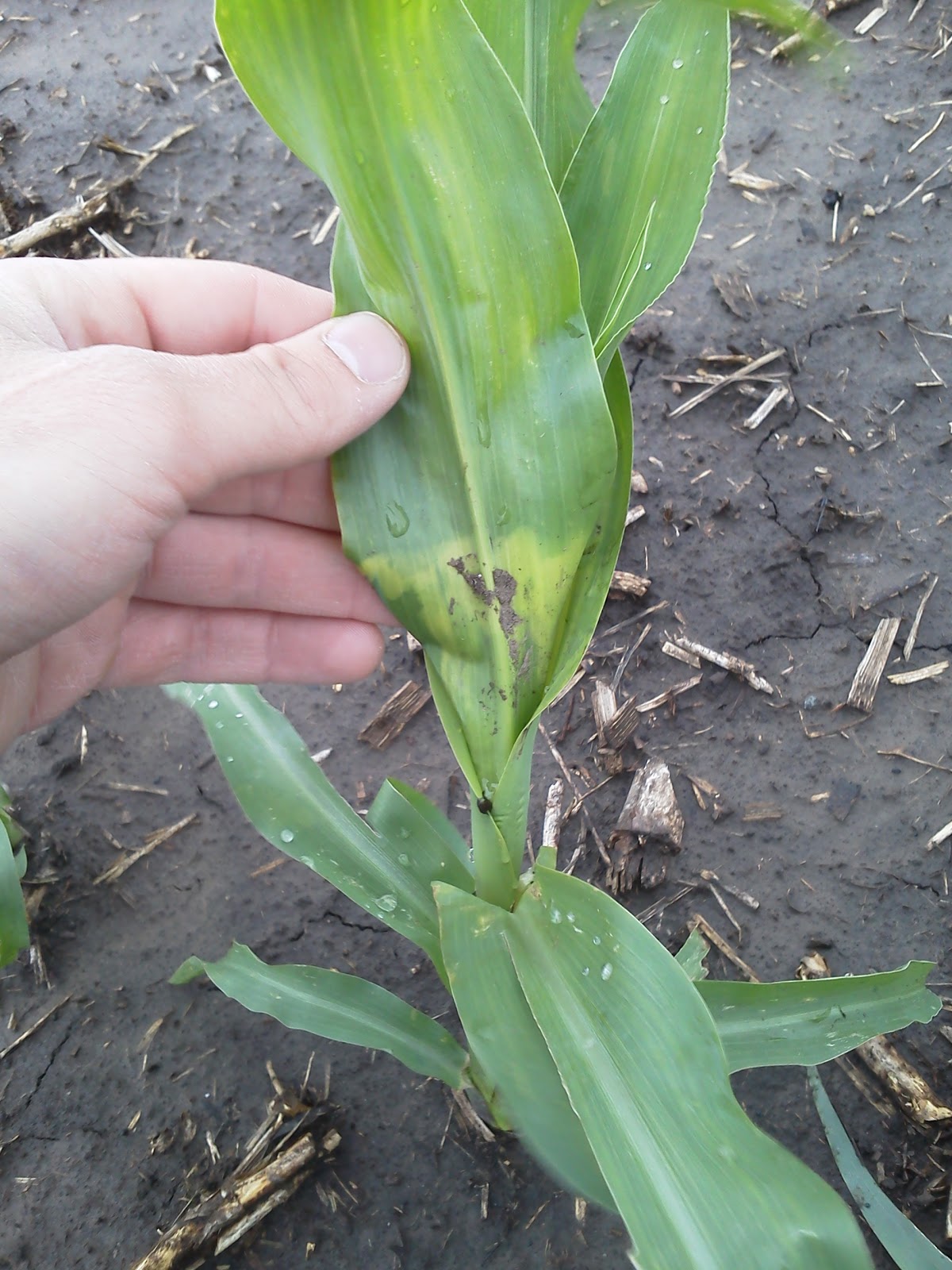
Corn leaf blotches

I have received a few phone calls this week about yellow blemishes showing up on corn leaves.  This looks similar to HPPD inhibitor damage (such a Callisto).  However, it is caused by dirt that had clung to the plant earlier in its life.

The blocking of sunlight causes the plant to focus chlorophyll production elsewhere so it can be more productive.  As the plant grows and the dirt falls off, the chlorophyll production should start back up.

There should be very minimal (if any) loss in production due to this syndrome.


Wednesday, April 18, 2012

New Sidedress Bars-UPDATE

Here's what we will be getting for our 2 new bars:


12 row DMI Bar
1000 gallon tank
120” fixed axle
Tractor tires
Raven controller and pump w/ Sky Trac


We are working on getting them in and assembled.  They should be ready to roll soon!

Monday, April 16, 2012

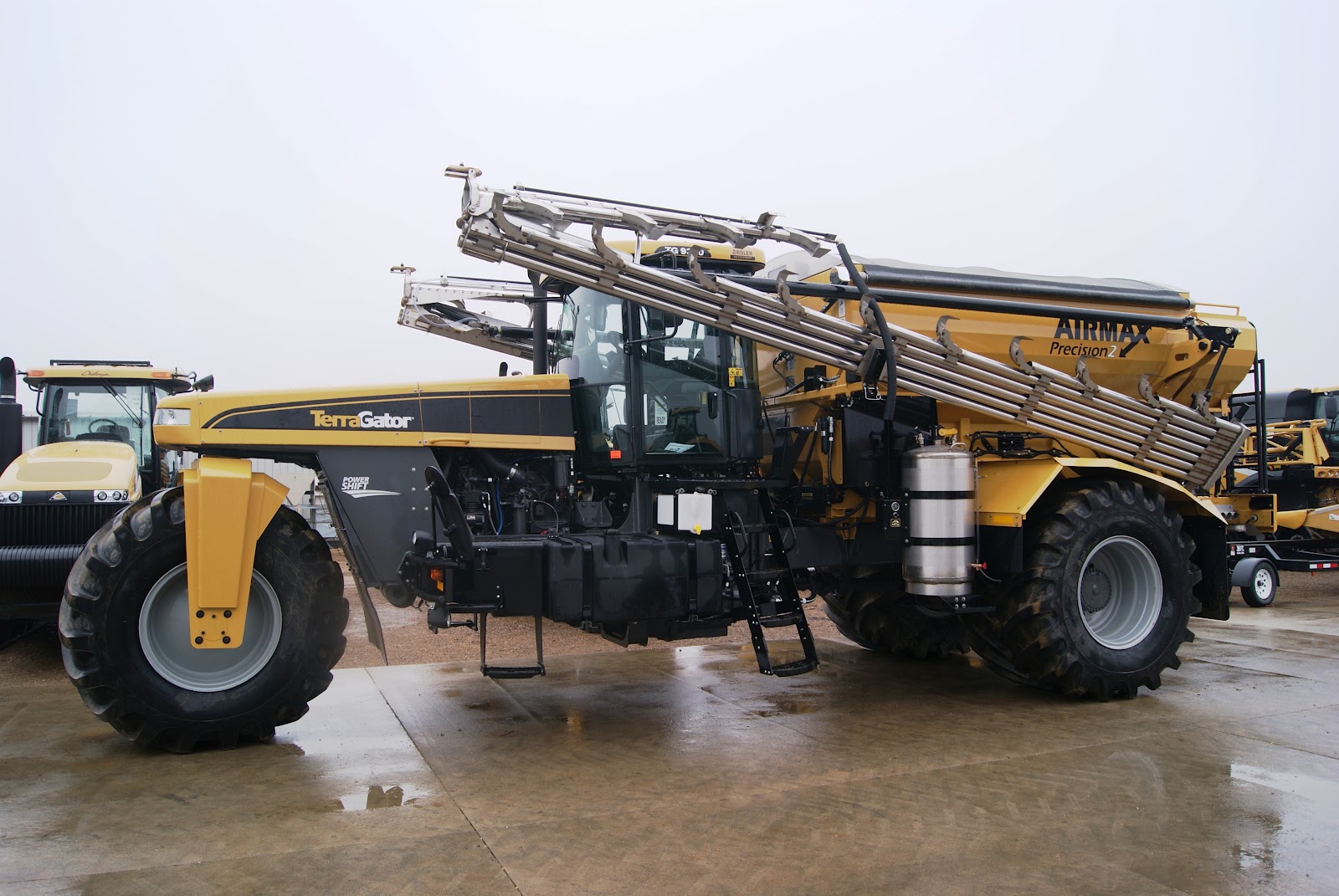
New Sidedress UAN bars

Ag Partners will have two new sidedress UAN bars available this spring in our area!!!  More details to come, but this is an exciting addition to enable late or additional nitrogen applications!  Lets get the nitrogen where the plant needs it, when the plant needs it!

Monday, April 2, 2012

Friday, March 30, 2012

More than Manure


Recently, I have been testing a new product called More than Manure by SFP.  It contains Nutrisphere (a nitrogen stabilizer) and Avail (which make phosphorus more available).  It is a revolutionary product because of it's ease of use.  It can be poured directly into a lagoon or pit and will disperse by itself!

http://www.youtube.com/watch?v=B8SO3s6Fm6A&context=C4a0f2a6ADvjVQa1PpcFOs--8Vt3V2cGsWxKK3ZB431EEypSPJyPo=

Additionally, it can have some other benefits including eating up solids/crust (making manure more flowable) and reducing ammonia levels (increasing animal health and neighbor happiness).

This is a NEW product, so I have a couple test of it running.  In my testing, I have seen a pretty significant reduction of ammonia and a lessening in the crust (though not completely eliminating a heavy crust).

Please check out the video!

Friday, March 2, 2012

Fungicides Plus!


March 15th is the deadline for those prepaying fungicides to receive significant rebate incentives!!!

There has been a lot of debate lately regarding fungicide timing, rates and performance.  Timing is the key with fungicides.  Today’s fungicides contain both curative and preventative products.  In corn, the ideal time to spray is full tassel.  In beans, we need to shoot for R3.  Being off one week can reduce response substantially.  When customers buy their fungicide from me, I keep an eye on their crops’ progress for them to ensure appropriate application timing.


ISU trial data
Recently, V4 to V7 applications have become very popular in corn.  Farmers will add a full or partial rate of fungicide to their herbicide mix while spraying in this window.  This has proven to provide strong yield bumps, but I feel it should be considered an ADDITIONAL application.  When applied early, residual control can run out before plants need it most.

Fungicide response can be very hybrid specific!
Additionally, when you are running over the field at VT/R3, it is a good idea to throw a long residual insecticide in the mix. Though you might not be at threshold for any one insect, it’s a safe bet that you will pick up the $7/ac(ish) the insecticide costs from cumulative control of corn rootworm beetles, corn leaf aphids, spider mites, soybean aphids, grasshoppers, green clover worm, etc. In beans, if you need to spray a second round of insecticide for aphids, most insecticide companies will help pay for the chemical needed.

Notice better filling at the tip!
Helena's product, CoRoN, is a foliar nitrogen product that uses boron to help bring the nitrogen into the plant more efficiently. This is ideal for fungicide and insecticide applications because it assists in the fungicide uptake and effectiveness as well.


Sources:
Helena Chemical Company
Syngenta
Iowa Stute University Extension: Alison Robertson and Daren Mueller.  Publication: http://www.extension.iastate.edu/CropNews/2012/0109robertson.htm

Tuesday, February 28, 2012

Row Width, Fertility and Population


Over the past few years, row width and planting population have been hot topics in the ag world.  Monsanto recently provided some new insight into this mysterious relationship which helps make sense of why some have had success and others have failed.

The following data is from Monsanto’s GEN trials.  They collected data from 59 trial locations throughout the Midwest.  Below is the information for Northern Iowa.  Monsanto planted in 20 inch rows at 5 different populations ranging from 24,000 to 48,000 seeds/acre and replicated each trial 3 times/plot.  Fertility data used was based on the farmers’ yield goal for the test field.  I have information on later hybrids and very detailed information if anyone has interest.


A few years ago, I cared for several seed fields near Waterloo.  Monsanto was converting all of their seed fields to 20 inch rows because they were able to fit more female rows between the male rows.  At that point, I was under the belief that 20 inch rows would eventually become more profitable for field corn because they produced seed corn that yielded the best in 20 inch rows.  Today, it makes sense to me that they are pushing higher populations using fixed ear hybrids because the yield is there and they can sell more seed.

The problem is, as we get to 40,000+ planting populations we can no longer support good stalks and roots in 30 inch rows.  We have to move to 20 inch rows to support these high populations and negate intra-crop competition.  However, without proper fertility, high populations cannot be accomplished regardless of the row spacing.
Going from 30,000 plants to 48,000 and 180 to 250 bu fertility yield goal, the data shows as much as a 101 bushel jump ($606/acre @ $6 corn) using the top yielding hybrids.  The extra seed cost is about $68/ac and extra Nitrogen is about $44/ac (don’t forget P&K).

My point is not that we should all go out and buy 20 inch row planters and manage to 48,000 plants per acre.  I realize that some ground may never be capable of these kinds of yields.  The goal is to get farmers thinking about where they are today and where they are headed so we can integrate a plan to get them where they would like to be.